Published: June 12, 2026 | Category: Reflections, History, Institutions & Human Nature
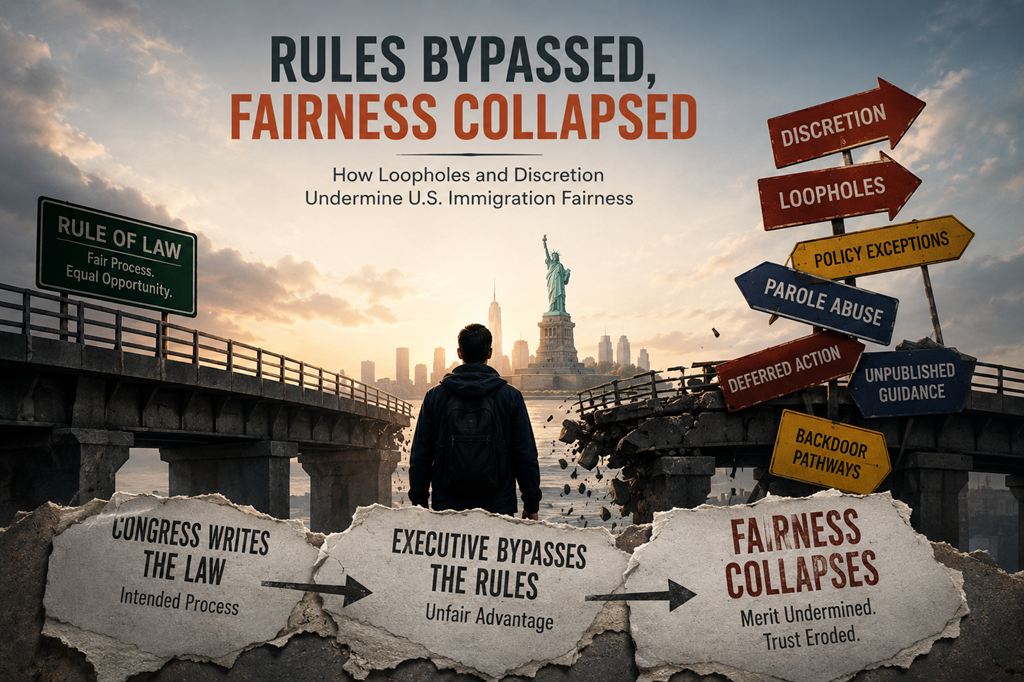
In history, the fall of a dynasty is usually marked by war, famine, or foreign invasion as the closing punctuation of its final chapter. But the true disease almost always takes root long before dust rises on the battlefield. It is not necessarily a dramatic coup, nor a rebellion of rivers of blood. Quite often, it begins at an extremely quiet point in time — the moment some rule is quietly bypassed for the first time, or some line of defense is easily crossed for the first time, with no one speaking up to stop it and no way to correct it. That is when the seed of collapse is planted.
When connections can override institutions, when flattery can replace truth, when power can sidestep the rules that bind everyone else — in that moment, the dynasty begins its journey of decline. Not because that single instant is so deadly, but because everything that follows will now seem to happen as a matter of course.
Imagine a society where, one day, someone discovers that with enough power or the right people around him, he no longer needs to follow the rule everyone tacitly agreed to follow. It is nothing earth-shattering. Perhaps a document that should not be signed gets signed; a remark that should not be let go is gently waved off; a process that should not be skipped is skipped. And the result: nothing happens to him. He receives no punishment. He even profits from the bypass — he looks more efficient, his costs run lower, he appears more "capable."
So the onlookers begin to learn. Not because they were born wicked, but because the demonstration effect of a broken rule is overwhelming. People quickly work out a simple formula: those who follow the rules lose; those who break them gain. Even more exquisite — as long as the breaking is not too flagrant, as long as a reasonable story is composed afterward, as long as enough voices crowd around willing to defend you, then it is not called breaking the rules at all. It gets prettier names: "flexibility," "political wisdom," even "a necessary measure."
The rule-breakers even begin to think themselves clever. What they gain is not only profit but a sense of intellectual superiority. Look — I found the shortcut. I slipped past the constraints that bind ordinary people. I am the master of the rules, not their slave. This self-intoxication becomes the most dangerous poison of all, because it makes a person fall ever more in love with the act of breaking itself, no longer distinguishing which rules deserve keeping and which do not — while his supporters see no problem whatsoever. In the end, every rule becomes a price open to negotiation.
And so the social order quietly inverts. Rules were once the guardrails protecting every person's basic rights and fair chances; now breaking the rules becomes the law of survival. The more institutions you can bypass, the more capable you are. The more flattery you can deploy to bury the truth, the more authority you hold. The more loyalists you can set above procedure, the more faithful followers you command.
And those who still try to follow the rules? They are mocked as pedantic, weak, unable to adapt. Their voices drown beneath the clamor of praise; their questions are branded the dissent of people who "cannot read the times." Objections are cursed as stupidity and ignorance. When flattery becomes the only axis of politics, truth loses its footing. It is not that no one sees the truth — it is that the cost of speaking it has climbed so high that almost no one is willing to pay.
The most fatal turning point is this: when most people no longer believe in the rules, the political system itself loses its credit. For a political system is, at its essence, a collection of rules — a consensus about how power is produced, how it operates, and how it is checked. If every rule can vary by person and be voided by circumstance, then the system is no longer one of laws but one of men. And rule by men, in the end, serves only that man and his small circle.
By then, society has entered the countdown to collapse. No one trusts the institutions anymore, because the institutions have been proven bypassable. No one trusts the truth anymore, because flattery sounds better and is safer. No one trusts that power will be restrained, because power has already demonstrated that it can rewrite the rules at will. People are left with exactly two choices: join the ranks of the rule-breakers and try to become one of the profiting few — or endure in silence, waiting for the final collapse.
No dynasty in history ever fell suddenly because of a single war. War is merely the last straw on the camel's back. The true fall begins on the day hearts scatter — the day people stop believing the rules will protect them; the day they watch rule-breakers rise step by step instead of being punished; the day the silent majority discovers there is nowhere left to appeal to reason. And then — the explosion. A crowd that can bear no more, fanned along by the ambitious, and the new wave of revolution ignites.
So the day order breaks usually arrives very quietly — so quietly that no one realizes it was the dynasty's true turning point. But from that day on, the countdown has already begun. When a rule is first bypassed without consequence, when flattery first drowns out truth with tacit consent, when power first sidesteps procedure and is accepted — if nothing is corrected, nothing changed, then the collapse is only a question of how long people can stomach such a culture. What remains before the final hour is merely time.
And each of us, in the long river of history, faces the same choice: to stand up the first time a rule is broken and say "this is wrong"; to look for the chance to mend things; to find someone capable and fit to repair them — or to wait in silence for the final collapse to arrive. Because history also teaches us this: silence has never been the safe option. It only makes the collapse come faster — and more completely.